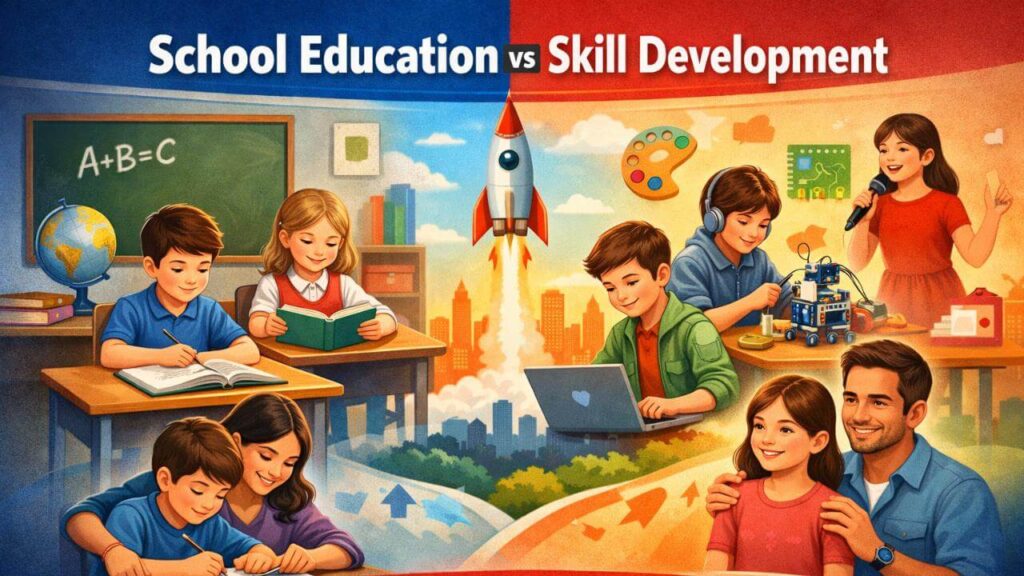
School education and skill development courses are both important for a child’s overall development, and they serve different but complementary purposes.
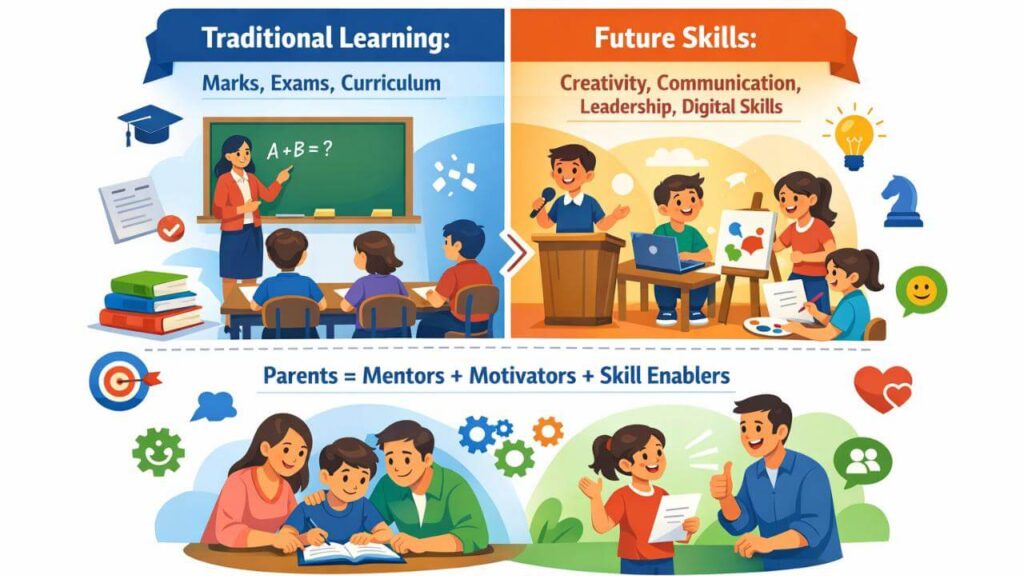
School education provides children with a broad foundation of knowledge in various subjects, including math, science, history, and language arts. It also helps children develop essential skills such as reading, writing, critical thinking, and problem-solving. The primary goal of school education is to prepare children for higher education and for future careers.
On the other hand, skill development courses focus on specific skills that children may need in their personal or professional lives. These skills may include public speaking, computer programming, creative writing, cooking, music, art, and sports, among others. Skill development courses help children develop a diverse set of skills that can boost their confidence, creativity, and problem-solving abilities. They also provide children with opportunities for personal growth, socialization, and self-discovery.
Therefore, both school education and skill development courses are necessary for a child’s overall development. A well-rounded education should include both school education and skill development courses, so that children can develop the skills they need to succeed in all areas of life.
Growing Importance of Skill Development in India
Nowadays, Indians are also focusing on skill development courses. Skill development courses have gained a lot of importance in India in recent years.
The Government of India launched the Skill India Mission in 2015 with the aim to train over 40 crore (400 million) people in various skills. The goal is to create a skilled workforce that can contribute to the country’s economic growth.
This shows that skill development is no longer optional — it is becoming essential for future success.
What is Skill Development?
Skill development refers to the process of acquiring or improving the abilities, knowledge, and expertise required to perform a task or job effectively.
It involves learning new skills or enhancing existing ones through a structured and deliberate approach.
Skill development can be achieved through:
- Formal education
- On-the-job training
- Mentoring and coaching
- Workshops
- Online courses
- Professional development programs
The goal of skill development is to enable individuals to become more competent and productive in their roles, enhance career prospects, and adapt to a rapidly changing world.
Top 8 Skills Required for School-Going Kids
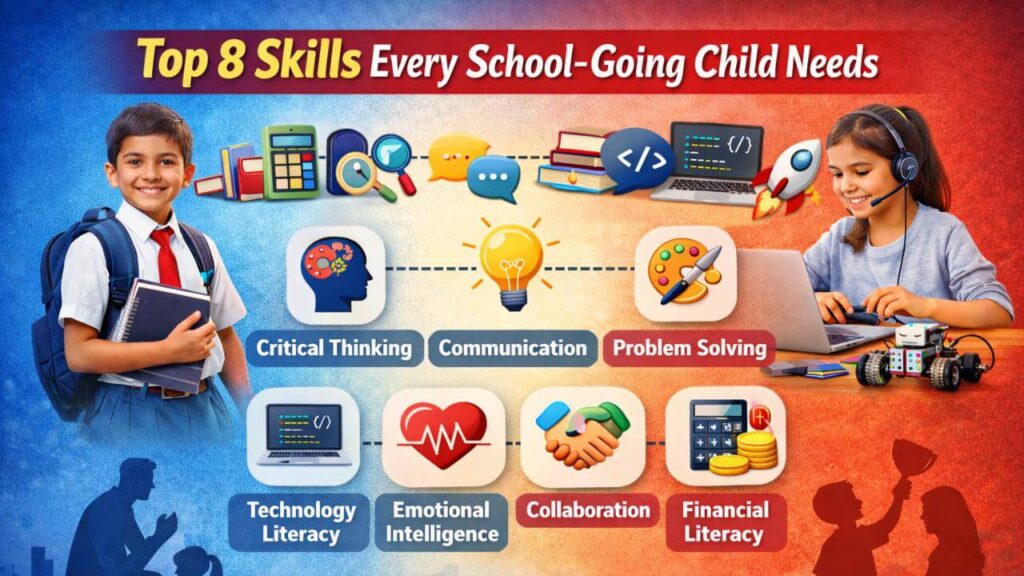
School-going kids require a range of skills that will help them succeed in school and beyond. Here are the top 8 essential skills:
- Literacy Skills
Reading, writing, and communication are fundamental skills that kids need to succeed in school and life. - Math Skills
Numeracy and problem-solving skills are essential to excel in math and science subjects. - Critical Thinking Skills
The ability to analyze, evaluate, and draw conclusions strengthens reasoning and decision-making abilities. - Creativity and Innovation
Encouraging creativity helps children develop imagination and come up with innovative ideas. - Social Skills
Children must learn teamwork, communication, and relationship-building skills. - Time Management
Managing time effectively helps children prioritize tasks and meet deadlines. - Self-Discipline
Self-discipline and self-motivation help children stay focused and achieve their goals. - Digital Literacy
In today’s digital age, children must be comfortable using technology safely and effectively.
Drawbacks of Only School Education Without Skill Development
If children focus solely on school education and do not participate in skill development activities, they may face several drawbacks in the future:
- Limited Opportunities
Without diverse skills, children may have fewer career and life opportunities. - Lack of Confidence
Children may hesitate to take new challenges. - Reduced Creativity
They may struggle to think innovatively. - Poor Time Management
They may find it difficult to manage tasks efficiently. - Limited Social Skills
Teamwork and communication abilities may remain underdeveloped. - Limited Personal Growth
Children may miss opportunities for self-discovery and overall development.
Importance of Skill Development Courses Among Children
Skill development courses provide numerous benefits:
- Improved academic performance
- Enhanced employability
- Increased confidence
- Better decision-making
- Lifelong learning attitude
These courses help children build the skills, confidence, and motivation needed to succeed in school and in life.
Which Age is Suitable for Involving Kids in Skill Development Courses?
There is no fixed age. It depends on the child’s individual development and the type of course.
Generally:
- 3–4 years: Basic motor, language, and social skills
- 6–10 years: Creativity, communication, foundational coding, sports
- 11+ years: Advanced technical, leadership, and career-oriented skills
Parents should choose courses based on the child’s interests, age, and learning style.
Parents’ Role in Helping Their Kids with Skill Development
Parents play a crucial role in their children’s development. Here’s how they can support skill development:
- Identify Their Interests
Help children discover what they enjoy. - Research Suitable Courses
Choose courses based on age and ability. - Encourage Participation
Explain the benefits and motivate them. - Provide Resources
Offer books, materials, and necessary tools. - Celebrate Success
Appreciate achievements to boost confidence. - Model Lifelong Learning
Show a growth mindset by learning new skills yourself. - Create a Supportive Environment
Encourage experimentation and learning from mistakes.
Why Parents Should Encourage Skill Development Courses
- Strong foundation for future success
- Greater confidence and self-esteem
- Love for learning
- Improved academic performance
- Better social skills
- Greater career opportunities
By encouraging skill development, parents help children reach their full potential.
Conclusion
In summary, children who focus solely on school education without participating in skill development activities may miss out on opportunities, confidence, creativity, time management skills, social abilities, and personal growth.
A balanced approach that combines school education and skill development courses ensures well-rounded growth and prepares children for real-world challenges.
Parents play an essential role by identifying interests, encouraging participation, providing resources, and creating a supportive environment.
There is no specific age to start skill development — the right time depends on the child. However, starting early gives children a strong foundation for future success.
A well-rounded education is the key to shaping confident, capable, and future-ready children.
Take the Next Step for Your Child’s Bright Future
Help your child grow beyond school education with practical skill development.
👉 Book A Free Trial Class Now
Give your child the opportunity to learn, explore, and build confidence.
👉 Apply For Franchise
Start your own education center and make a difference in children’s lives.
📲 Follow us on Social Media
Stay updated with parenting tips, skill development ideas, and student success stories. Facebook, Instagram, You tube, LinkedIn, Twitter
Let’s build confident and future-ready children together.
Try Our Online Abacus Simulator
FAQs
Q: What is the difference between school education and skill development?
Ans: School education focuses on academic knowledge like math, science, and languages, while skill development focuses on practical abilities such as communication, creativity, coding, sports, and leadership.
Q: Why is skill development important for school-going children?
Ans: Skill development improves confidence, creativity, problem-solving ability, and social skills, helping children succeed both academically and professionally.
Q: What are the drawbacks of focusing only on school education?
Ans: Children may face limited career opportunities, low confidence, weak social skills, poor time management, and reduced creativity if they ignore skill development.
Q: At what age should children start skill development courses?
Ans: Children can start basic skill development activities from 3–4 years old, depending on their interests and developmental readiness.
Q: What are the top skills every school-going child should learn?
Ans: Literacy, numeracy, critical thinking, creativity, social skills, time management, self-discipline, and digital literacy are essential skills for children.
Q: How can parents help in skill development?
Ans: Parents can identify their child’s interests, enroll them in suitable courses, provide resources, encourage participation, and create a supportive learning environment.