
Abacus teacher training is a program designed to equip individuals with the necessary skills and knowledge to teach others how to use an abacus. The training covers a wide range of topics, including abacus history, types, operations, and teaching methods.
During abacus teacher training, individuals learn how to use the abacus to teach students math skills, such as addition, subtraction, multiplication, and division. They also learn how to develop lesson plans, create learning materials, and assess student progress.
Abacus teacher training is typically offered by abacus training centers or educational institutions and can range from a few weeks to several months, depending on the program. The training may be conducted in-person or online and may include hands-on practice, group activities, and assessments.
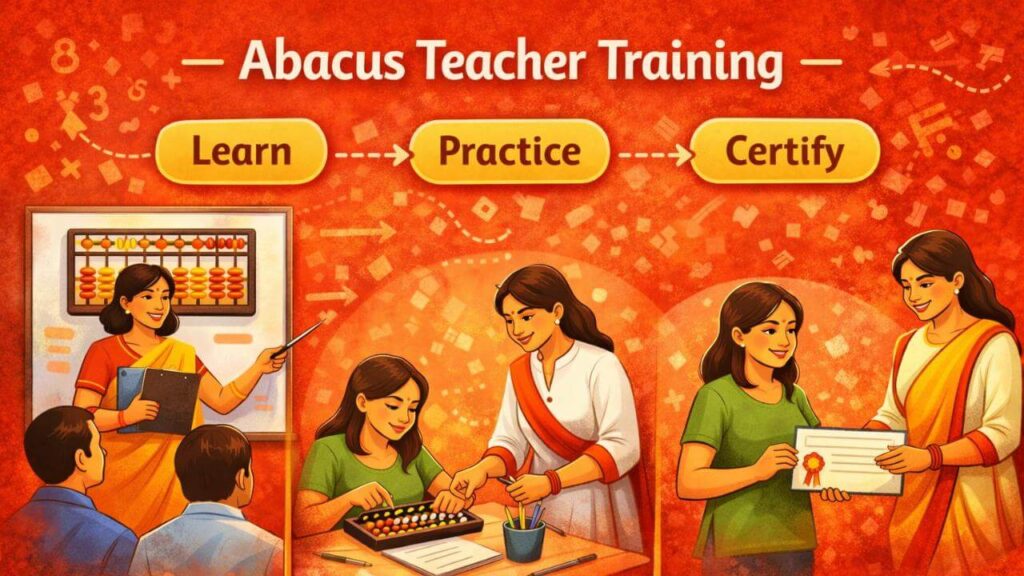
Is abacus an opportunity for home makers?
Homemakers can start by learning the abacus themselves and then offer abacus classes to children in their community. They can start small by teaching a few students at home and gradually expand their business by renting a small space or partnering with local schools.
Starting an abacus training center from home can also be a flexible option for homemakers who want to balance their work and family responsibilities. They can schedule classes at times that are convenient for them and their students, and also have the flexibility to adjust their schedule as needed.
Overall, learning and teaching the abacus can be a great opportunity for homemakers who are looking for a home-based business opportunity.
Abacus education is in demand, and many parents are willing to enroll their children in abacus classes to improve their mathematical skills.
Scope of abacus teacher training?
Some of the key areas covered in teacher training programs include teaching methods, curriculum development, classroom management, educational psychology, and assessment. Teacher training programs may also cover subject-specific knowledge and skills, such as mathematics, science, language arts, and social studies.
The scope of teacher training also extends beyond traditional classroom teaching to include areas such as online teaching, e-learning, and adult education. Teacher training can also prepare individuals for leadership roles in education, such as department heads, curriculum coordinators, or school administrators.
What is the salary of abacus Teacher in India?
The salary of an abacus teacher trainer in India can vary widely depending on several factors, including the individual’s qualifications, experience, location, and the organization or institution they work for.
In general, the salary of an abacus teacher trainer in India can range from around Rs. 20,000 to Rs. 30,000 per month. However, some experienced and highly qualified trainers may earn significantly more than this, particularly if they work for large organizations or institutions.
It’s important to note that salaries can also vary depending on the type of abacus training being offered. For example, trainers who provide individual or small group training may earn less than those who provide training to large groups or organizations.
Ultimately, the salary of an abacus teacher trainer in India will depend on several factors, and individuals should research salaries in their specific area and industry to get a better idea of what they can expect to earn.
Try Our Online Abacus Simulator
What are the responsibilities of abacus teacher?
The responsibilities of an abacus teacher trainer can vary depending on the organization or institution they work for and the specific role they are hired for. However, some common responsibilities of an abacus teacher trainer may include:
- Developing and delivering training programs: An abacus teacher trainer is responsible for developing and delivering training programs to individuals or groups who wish to learn abacus math. This may involve creating lesson plans, developing training materials, and delivering training sessions in-person or online.
- Assessing student progress: A trainer is responsible for assessing the progress of students and identifying areas where they may need additional support or guidance. This may involve reviewing student work and providing feedback, as well as developing individualized learning plans for students who are struggling.
- Providing support and guidance: A trainer is responsible for providing support and guidance to students who are learning abacus math. This may involve answering questions, providing additional practice opportunities, and offering feedback and encouragement.
- Maintaining records: A trainer may be responsible for maintaining records of student progress, including attendance records, grades, and other relevant data. They may also be responsible for keeping track of training materials and resources.
- Staying up-to-date with trends and developments: A trainer is responsible for staying up-to-date with trends and developments in the field of abacus math. This may involve attending workshops or conferences, reading industry publications, and networking with other professionals in the field.
Overall, the responsibilities of an abacus teacher trainer can be varied and challenging, requiring a strong understanding of abacus math theory and techniques, as well as excellent communication and interpersonal skills.
Is abacus good for brain?
Abacus training will stimulate the right side of the child’s brain, improving their ability to observe, visualize, and memorize. Over time, the child will improve the ability to see the abacus in their mind and calculate mental calculations.
Yes, there is evidence to suggest that learning and practicing abacus math can be beneficial for the brain in several ways.
Research has shown that learning and practicing abacus math can improve cognitive abilities such as attention, memory, and concentration. Additionally, it has been suggested that abacus math can stimulate both the left and right hemispheres of the brain, promoting the development of both logical and creative thinking skills.
Abacus math also involves the use of fine motor skills, which can help to improve hand-eye coordination and dexterity. This can be particularly beneficial for children, as it can help to improve their handwriting and other fine motor skills.
Overall, learning and practicing abacus math can be a fun and engaging way to promote brain development and improve cognitive abilities, particularly for children who are still in the developmental stages of their lives.
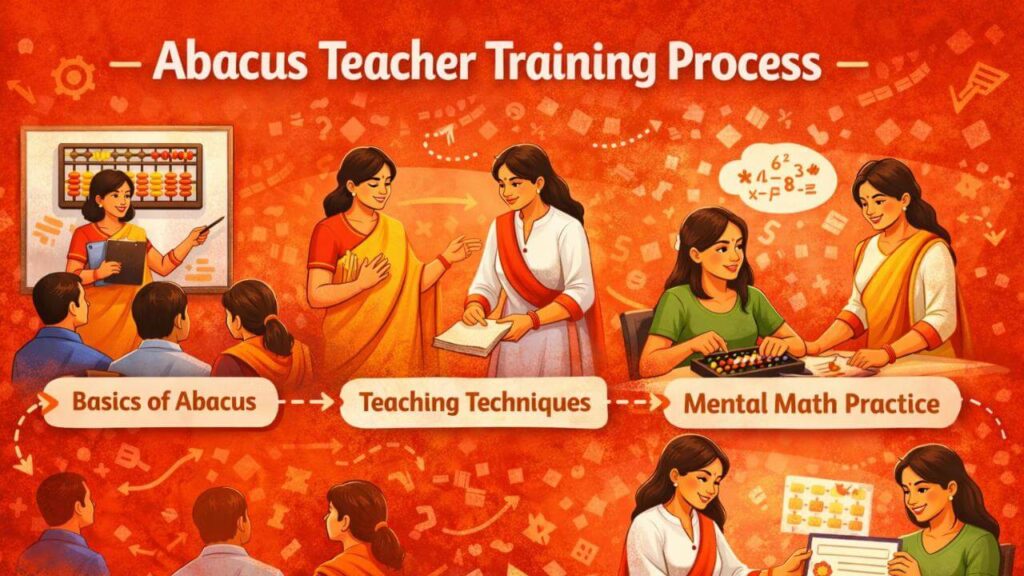
How do you teach abacus to students?
Teaching abacus math to students involves several key steps:
- Introduce the abacus: The first step in teaching abacus math is to introduce the abacus and explain how it works. Show the students how to use the beads to represent numbers and how to move the beads to perform calculations.
- Teach basic operations: Once students are familiar with the abacus, begin teaching them basic operations such as addition, subtraction, multiplication, and division. Start with simple problems and gradually increase the difficulty as students become more proficient.
- Practice, practice, practice: Practice is essential to learning abacus math. Provide students with plenty of opportunities to practice using the abacus and performing calculations. Encourage them to work through problems on their own and provide feedback and guidance as needed.
- Use visual aids: Visual aids such as flashcards and worksheets can be helpful in reinforcing abacus math concepts and providing additional practice opportunities.
- Incorporate games and activities: Games and activities can make learning abacus math more engaging and fun for students. Try incorporating games and activities that involve using the abacus, such as speed calculations or memory challenges.
- Provide positive feedback: Encourage students to keep practicing and provide positive feedback when they make progress or achieve success. Celebrate their achievements and provide opportunities for them to showcase their skills.
Overall, teaching abacus math to students requires patience, practice, and a positive attitude. With the right approach, students can develop a strong foundation in abacus math and improve their overall cognitive abilities.
can i teach abacus at home?
Yes, you can teach abacus math to your child or children at home, provided you have the necessary knowledge and skills to do so. There are several online resources and training programs that can provide you with the training you need to teach abacus math effectively. Additionally, there are several abacus math workbooks and practice materials available that you can use to supplement your teaching. It’s important to ensure that you have a clear understanding of abacus math theory and techniques before teaching it to your child or children, and to approach the teaching process with patience, enthusiasm, and a positive attitude.
How long does abacus teacher training take?
The duration of abacus teacher training can vary depending on the organization or institution offering the training program and the level of certification being pursued. In general, however, most abacus teacher training programs last between 3 and 6 months.
During this time, participants will typically receive training on abacus math theory and techniques, as well as instruction on how to teach abacus math to students. The training may be delivered through a combination of classroom instruction, practical exercises, and supervised teaching practice.
After completing the training program, participants may be required to pass a certification exam in order to become a certified abacus teacher. The exam may include written and practical components, and may be administered by a professional association or certification board.
It’s important to note that the duration of abacus teacher training can vary depending on the individual’s prior knowledge and experience with abacus math. Those who are already proficient in abacus math may be able to complete the training program more quickly than those who are new to the field.
What are the benefits of abacus teacher training?
There are several benefits to receiving abacus teacher training. Some of the key benefits include:
- Improved understanding of abacus math: Abacus teacher training provides participants with a deeper understanding of abacus math theory and techniques, which can help them become more proficient in performing abacus calculations and teaching abacus math to students.
- Enhanced teaching skills: Abacus teacher training can help participants develop their teaching skills, including how to effectively communicate with students, manage classroom dynamics, and provide individualized support and guidance.
- Increased job opportunities: By becoming a certified abacus teacher, participants can increase their job opportunities in a variety of settings, including schools, tutoring centers, and private practice.
- Personal and professional growth: Abacus teacher training can help participants develop personally and professionally, by building their confidence, improving their problem-solving skills, and providing opportunities for personal growth and development.
- Opportunity to give back: Abacus teacher training provides participants with the opportunity to give back to their communities by sharing their knowledge and expertise with others, particularly young students who may benefit from learning abacus math.
Overall, abacus teacher training can provide participants with a wide range of benefits, including enhanced skills, increased job opportunities, and personal and professional growth.
What are the teaching methods used in abacus teacher training?
Abacus teacher training typically involves a variety of teaching methods and techniques, designed to help participants develop the skills and knowledge needed to become effective abacus teachers. Some of the most common teaching methods used in abacus teacher training include:
- Lectures and presentations: In-class lectures and presentations are often used to introduce participants to the basic theory and principles of abacus math. These sessions may also cover teaching strategies and classroom management techniques.
- Hands-on practice: Hands-on practice is a key component of abacus teacher training, as it allows participants to develop their skills and gain confidence in performing abacus calculations. Participants may work on individual exercises or collaborate on group projects, depending on the training program.
- Case studies and real-life examples: Abacus teacher training may include case studies or real-life examples of abacus math in action, to help participants understand how abacus math can be applied in practical situations. This can also help participants learn how to teach abacus math in a way that is relevant and engaging to students.
- Classroom observation and feedback: Abacus teacher training may include opportunities for participants to observe experienced abacus teachers in action, and receive feedback on their own teaching practice. This can help participants identify areas where they need to improve and develop strategies for improving their teaching skills.
- Online learning resources: Abacus teacher training may include access to online learning resources, such as instructional videos, online tutorials, and digital resources. These resources can help participants reinforce their learning and develop their skills outside of the classroom.
Overall, abacus teacher training may involve a combination of these and other teaching methods, depending on the specific training program and the needs of the participants.
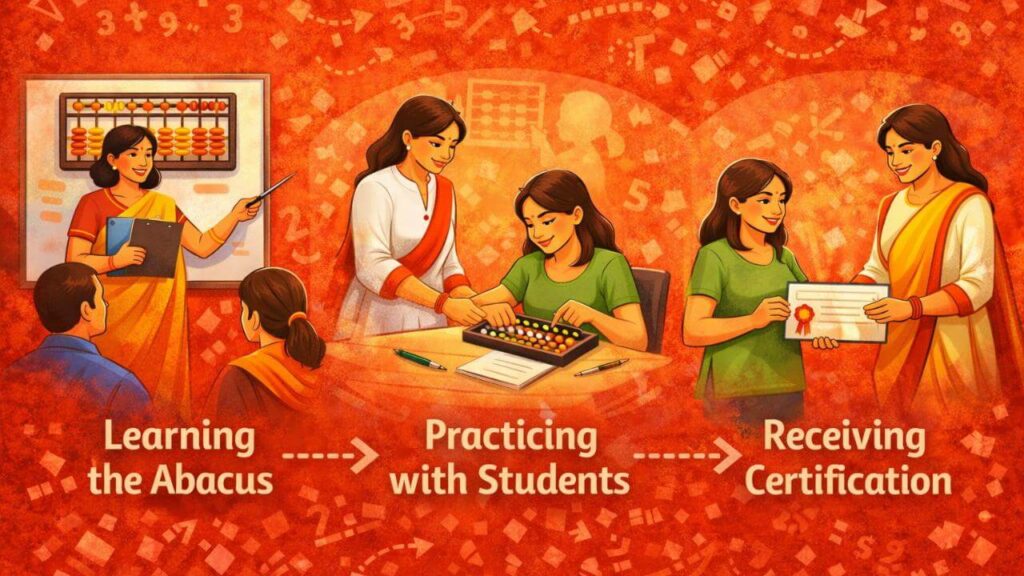
Normal tutors vs abacus trainer?
Normal tutors and abacus trainers are both educators, but they specialize in different areas of education.
Normal tutors provide one-on-one or group instruction to help students improve their academic performance in specific subjects. They may focus on academic subjects such as math, science, or English, or they may provide test preparation for standardized exams such as the SAT or ACT.
Abacus trainers, on the other hand, specialize in teaching the use of the abacus, a traditional counting tool, to perform arithmetic calculations. Abacus trainers teach students how to perform mathematical operations such as addition, subtraction, multiplication, and division using the abacus.
While normal tutors focus on academic subjects and test preparation, abacus trainers specialize in a specific tool for performing mathematical operations. Abacus training can help students develop mental math skills, improve concentration, and boost their confidence in math.
In summary, normal tutors and abacus trainers are both educators, but they specialize in different areas of education. Normal tutors focus on academic subjects and test preparation, while abacus trainers specialize in teaching the use of the abacus for performing mathematical operations.\
Proof after completion of abacus teacher training?
Upon completion of abacus teacher training, individuals may be awarded a certification or diploma that recognizes their proficiency in teaching abacus skills. This certification may be required by some abacus training centers or schools as a prerequisite for employment as an abacus teacher.
Get Started Today!
For Students & Parents:
Give your child the opportunity to experience Abacus learning.
Book A Free Trial Class Now
For Teachers & Entrepreneurs:
Start your own Abacus Center and build a successful education career.
Apply For Franchise
📲 Follow us on social media for the latest updates and student success stories. Facebook, Instagram, You tube, LinkedIn, Twitter
FAQs
Q: Is abacus teacher training popular in India?
Ans: Yes, abacus teacher training is popular in India. Abacus education is considered to be an effective way to enhance mathematical skills in children, and many parents in India enroll their children in abacus classes.
Q: What are the requirements to attend abacus teacher training in India?
Ans: The requirements for abacus teacher training in India vary depending on the program. Most programs require individuals to have at least a high school diploma or equivalent, and some may require prior teaching experience.
Q: What is the duration of abacus teacher training in India?
Ans: The duration of abacus teacher training in India varies depending on the program. Some programs can be completed in a few weeks, while others may take several months.
Q: What is the cost of abacus teacher training in India?
Ans: The cost of abacus teacher training in India varies depending on the program and the level of expertise required. Generally, online courses are less expensive than classroom-based courses.
Q: What are the teaching methods used in abacus teacher training in India?
Ans: Abacus teacher training in India uses a variety of teaching methods, including lectures, hands-on practice with the abacus, group discussions and activities, and online learning modules. The training may also include field trips to abacus factories or workshops.
Q: What are the career opportunities for abacus teachers in India?
Ans: Abacus teachers in India can work in private abacus training institutes, schools, or start their own abacus training centers. They can also work as freelance abacus tutors and provide one-on-one tutoring to students.
Q: Is certification available for abacus teacher training?
Ans: Yes, certification is available for abacus teacher training. Most programs require individuals to pass an exam or complete a project to demonstrate their proficiency in abacus teaching.